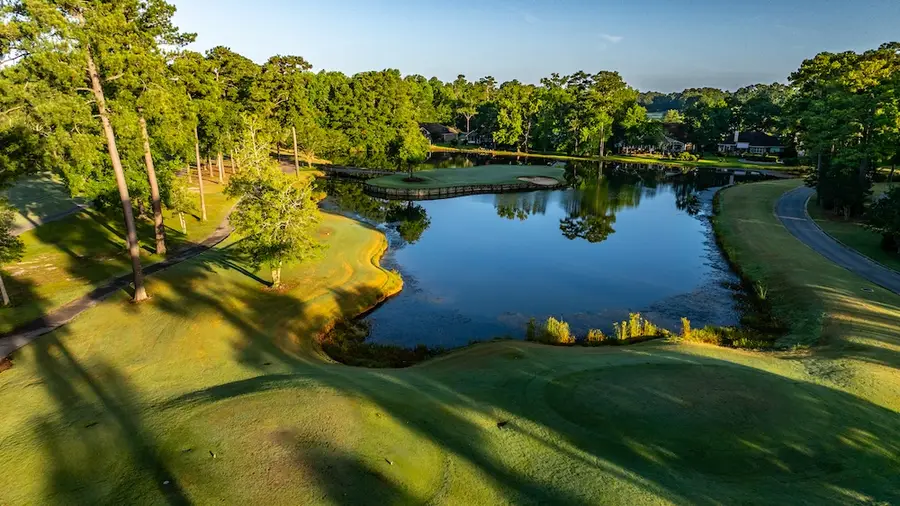
The drive from Sunset Beach, North Carolina down to Pawleys Island, South Carolina covers about seventy miles of coastline and some of the best golf in the Carolinas. In fall that stretch changes character. The humidity that hangs over the marsh all summer finally lifts, the spartina turns copper at the edges, and the hardwoods behind the tees start to color. Rounds that felt like a grind in August play the way the architects drew them.
Below are ten courses worth building a fall trip around, listed roughly north to south so you can plan the days without doubling back. Every one of them is bookable inside one golf package, and every one of them shows a different side of autumn on this coast.
Why fall suits this part of the coast
Three things change once September turns over. Daytime temperatures settle into the seventies and low eighties, which means afternoon tee times stop being a survival exercise and become the best value on the sheet. Turf firms up as the nights cool, so the ground game comes back into play on the older Dan Maples layouts and on anything sitting on sandy ground. And the light gets low and long, which matters more than golfers expect on courses like Tidewater and Caledonia where the whole point is what you are looking at.
The tradeoff is daylight. Sunrise slides later through October and November, and courses in this area often run aeration and overseeding in the early autumn window. Ask when you book rather than after you arrive. Dates move year to year and vary course by course.
Sunset Beach and the North Carolina end
1. Sea Trail, Maples Course

Dan Maples built this one in 1990 at 6,374 yards from the back, and it is the friendliest opener on this list. The corridors are lined with giant oaks that come into their own once the light drops, and the round is decided on the greens rather than off the tee.
Put it first on a fall itinerary. It gets the group loose after the drive without punishing anybody, and the walk between shots is genuinely pleasant when the air is cool. See the course page.
2. The Pearl Golf Links
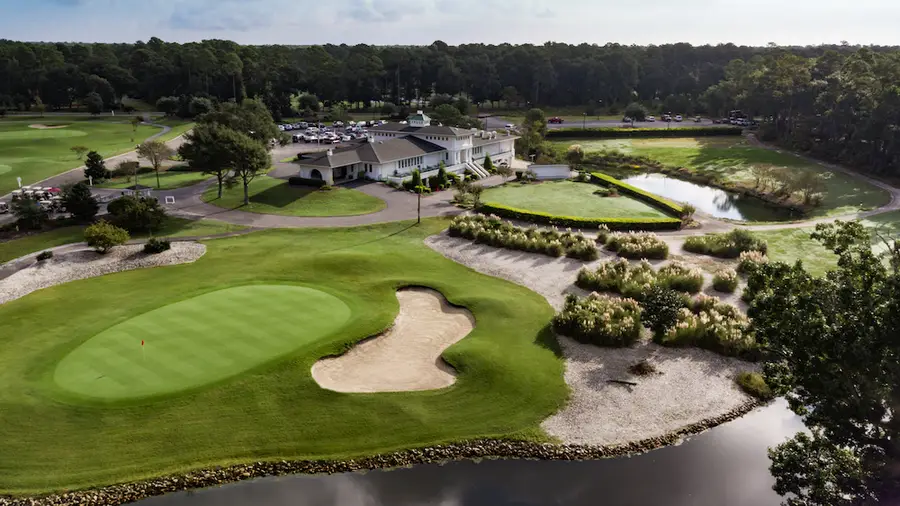
Twenty seven holes on a 900 acre marsh preserve, another Maples design, this time from 1986. The finish runs along the Calabash River and it is the most obvious fall photograph on the North Carolina end. Marsh grass goes gold from the middle of October onward and the whole property reads warmer than it does in summer.
It is also a course where the wind off the water matters. Cooler air tends to be steadier and less gusty than the summer sea breeze, which is one of the quiet reasons scores here improve in the autumn. See the course page.
3. Oyster Bay Golf Links
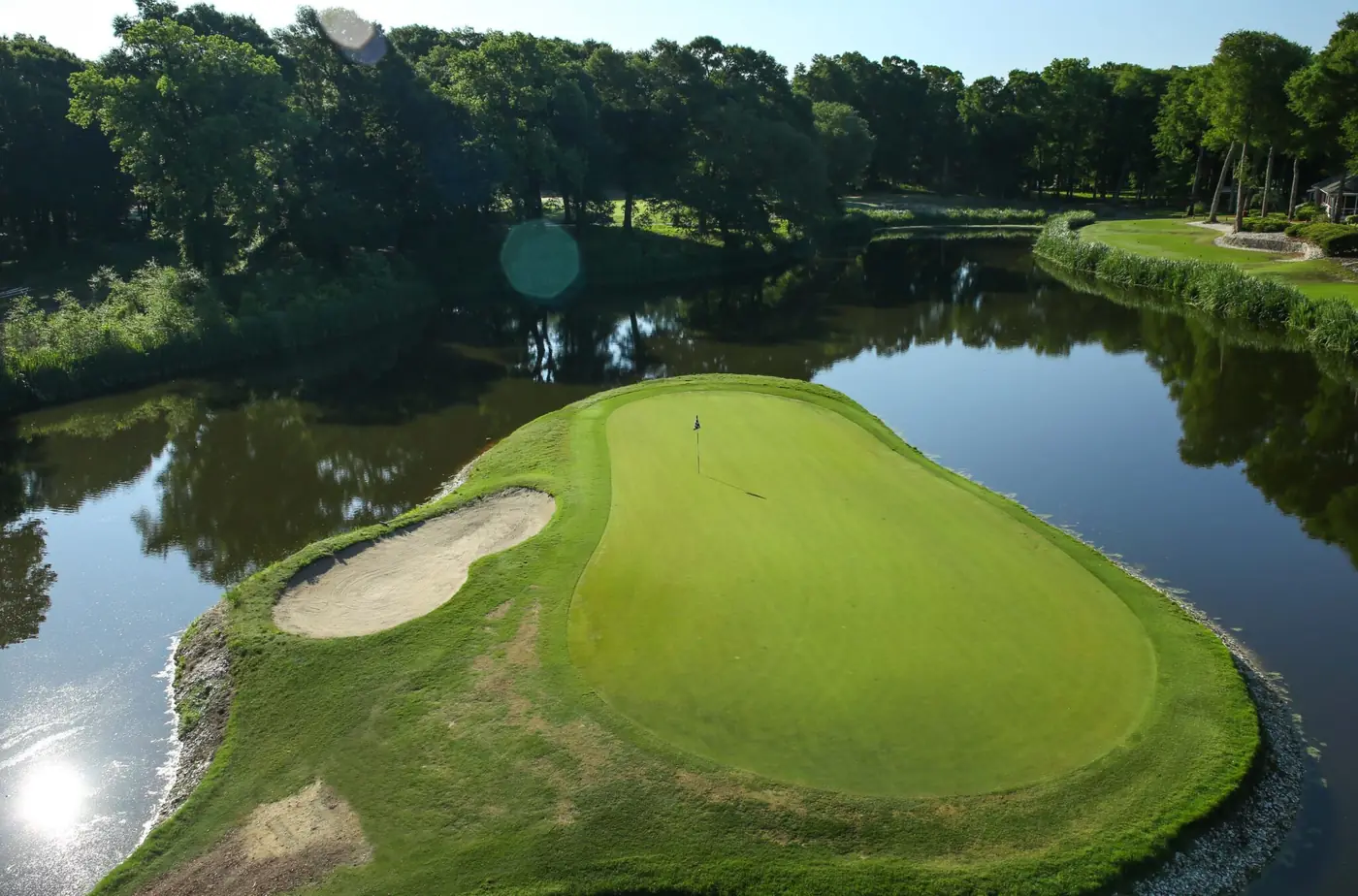
Two island greens, ocean breezes and the oyster shell bunkers that nobody forgets. At 6,685 yards it is not long, but the water is everywhere and the shot values are all about commitment.
This is a good fourth or fifth round of the trip. By then the group has settled, and Oyster Bay rewards a player who has found some rhythm more than it rewards a player swinging hard on day one. See the course page.
4. Rivers Edge

A short hop inland to Shallotte for what many people consider Arnold Palmer's best work in the Carolinas. It plays 6,909 yards to a 149 slope, and the river holes on the back nine are the reason to make the detour.
Fall is the right time to take this one on. Firmer turf means the elevated tees actually give you something back, and the cooler morning air over the river is worth an early time. See the course page.
5. Tiger's Eye
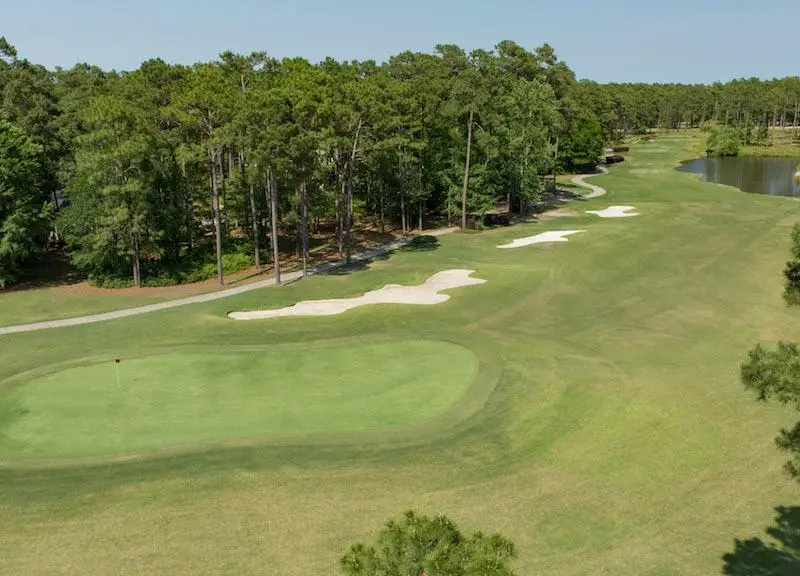
Tim Cate's 2000 design at Ocean Isle Beach has up to sixty feet of elevation change, coquina boulders through the property and an island green par three. It is the most dramatic looking course on the North Carolina side and it holds up at 7,014 yards.
Elevation plus low autumn sun is a real combination here. The shadows across the mounding in late afternoon change how the lines look, so trust the yardage over the eye. See the course page.
6. Thistle Golf Club
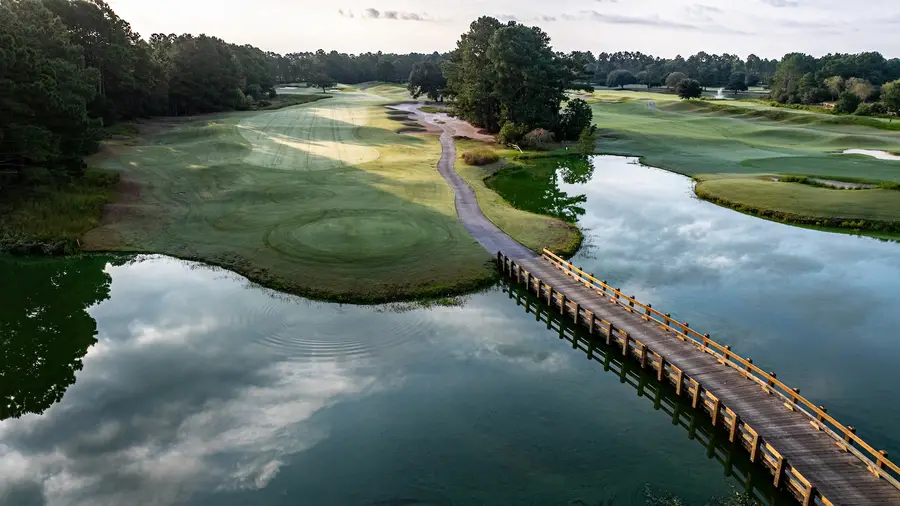
Another Tim Cate course, this one back in Sunset Beach and a completely different exercise from Tiger's Eye. Thistle is open and exposed, twenty seven holes of it, and the Scottish theme is more than a clubhouse decision.
Open ground and firm autumn turf is the whole argument for playing here in fall. Bump and run shots that would stop dead in July release properly in November. See the course page.
Crossing into South Carolina
7. Tidewater

The obvious stop once you cross the state line. Tidewater occupies a seaside peninsula with views of the Intracoastal Waterway on one side and the Atlantic on the other, plays 7,044 yards to a 148 slope, and was named America's best new public course when it opened in 1990.
Of every course on this list, this is the one most transformed by the season. The marsh surrounding those elevated holes turns, and the views stop being pretty and start being the reason you came. See the course page.
Pawleys Island
8. Caledonia

A Mike Strantz design from 1994 on a former rice plantation, and a course a lot of golfers will tell you is the best in the area. It is only 6,526 yards to a par of 70, and it does not need another yard. The closing hole plays back across the water to a green sitting under the clubhouse porch.
Book this one early. Tee times are limited year round and the autumn windows go first, so it is worth naming Caledonia when you request a package rather than hoping it is still open later. See the course page.
9. True Blue Golf Club
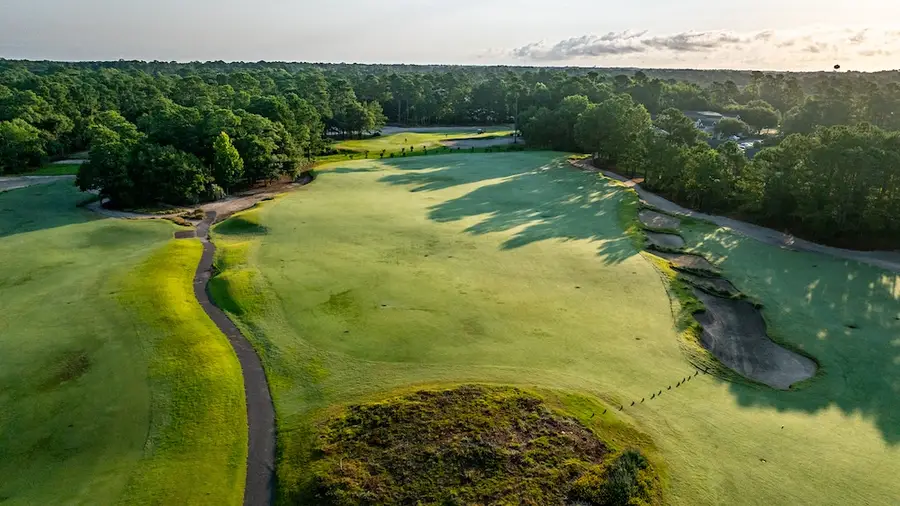
Caledonia's sister course and its opposite in temperament. Strantz built True Blue in 1998 across sandy, wide open ground at 7,126 yards, and regulars describe it as a cross between Pinehurst No. 2 and Pine Valley.
Sandy ground drains and firms quickly, so autumn is when this course plays closest to its intent. Expect more roll than you are used to and more trouble than you expect if you chase it. See the course page.
10. Pawleys Plantation
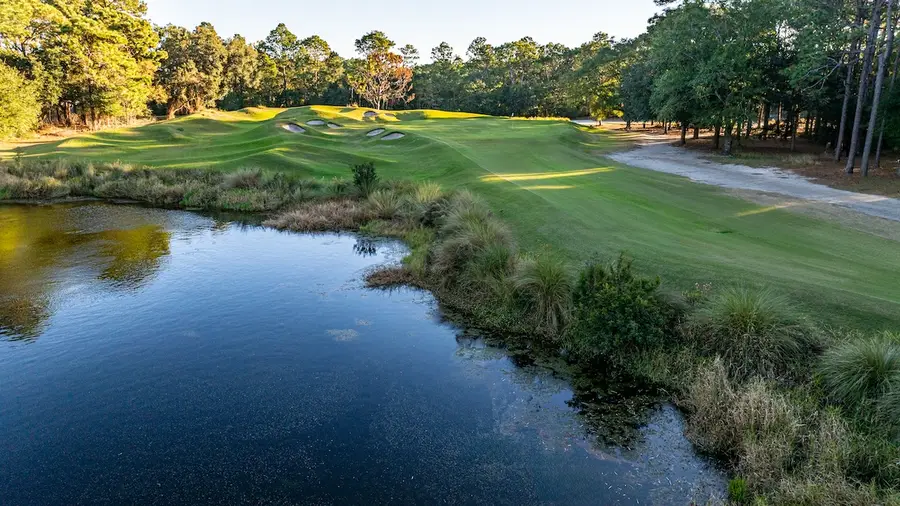
Jack Nicklaus opened Pawleys Plantation in 1988 and it still reaches a 150 slope from the tips at 7,026 yards, the stiffest number on this list. Lake and marsh run through the whole property and the holes out over the salt marsh are what people remember.
Save it for the last morning. It is the hardest test here and it is more enjoyable when the group has three or four rounds in hand rather than none. See the course page.
One more worth adding
If your group wants a fifth round on the Pawleys end without another 7,000 yard test, Heritage is the answer. Dan Maples built it in 1986 as a Lowcountry par 71 stretching close to 7,000 yards from the championship tees, and the avenue of live oaks on the way in is one of the best arrivals in South Carolina golf. See the course page.
How to lay the days out
- Stay in one place rather than two. Basing the group in the North Myrtle Beach area keeps every course on this list inside about an hour and saves moving luggage mid trip.
- Group the North Carolina courses on consecutive days instead of crossing back and forth. Sea Trail, The Pearl, Oyster Bay and Thistle all sit close together around Sunset Beach.
- Put the two hardest rounds, Pawleys Plantation and Rivers Edge, in the middle or at the end, not on the first morning.
- Take the later tee times in October and November. Afternoons are comfortable in autumn in a way they never are in midsummer, and the light on the marsh courses is better.
- Ask about aeration and overseeding dates when you book. They vary by course and by year, and it is the one thing that can quietly spoil an otherwise well planned week.
Booking it as one package
Every course above can be combined with lodging and tee times into a single golf package at one price. Tell us which courses matter most to the group, how many rounds you want and roughly when you are coming, and we will build the week around the times that are actually available. Autumn dates at Caledonia, True Blue and Tidewater go early, so the sooner we know your window the better the tee sheet looks.